
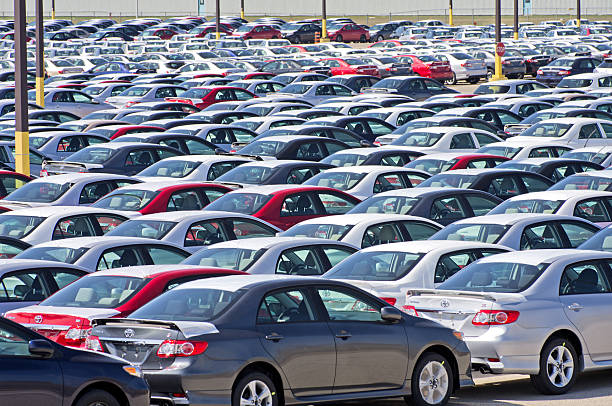
The U.S. Auto industry stands at a turning point. Market forces collide at full speed. Sales trends shift rapidly. Consumer preferences evolve daily. At the same time, government policy reshapes the playing field. As a result, automakers face both opportunity and pressure.
Today, the industry moves forward, but not without friction. Although sales showed strength in 2025, warning signs appeared soon after. Meanwhile, electric vehicles face new challenges. Still, innovation refuses to slow down.
Sales Growth Defies Policy Headwinds
U.S. new-vehicle sales surprised many observers in 2025. Despite policy disruptions, sales rose by 2.4 percent. As a result, total vehicle sales reached 16.2 million units for the year. That growth occurred even as tariff pressures increased and EV incentives expired.
Import tariffs raised costs for automakers. However, manufacturers chose a strategic response. Instead of passing costs fully to consumers, they absorbed much of the impact. Consequently, monthly payments stayed relatively stable. This move helped protect demand in a fragile market.
At the same time, EV demand peaked just before federal tax credits ended. Buyers rushed to take advantage of incentives. Afterward, demand cooled. However, another segment gained momentum. Hybrid vehicles surged by nearly 28 percent. Therefore, consumers clearly sought balance. They wanted efficiency without full reliance on charging infrastructure.
Moreover, hybrids offered flexibility. They reduced fuel costs. They avoided range anxiety. As a result, buyers embraced them as a practical alternative.
Early 2026 Sales Send Warning Signals
While 2025 delivered growth, early 2026 changed the narrative. In January, U.S. car and truck sales dropped sharply. The annualized rate fell to 14.9 million units. This marked the lowest level in three years. Compared to December 2025, sales declined by 7 percent.
Harsh winter weather played a role. However, weather alone failed to explain the slowdown. Instead, deeper issues emerged. Vehicle prices climbed due to tariffs. EV incentives disappeared. Insurance premiums rose. Ownership costs increased across the board.
As a result, buyers hesitated. Many delayed purchases. Others exited the market entirely. Analysts now watch consumer confidence closely. If weakness continues, broader economic effects may follow. Auto sales influence manufacturing, employment, and financing. Therefore, prolonged softness could ripple across the economy.
Electric Vehicles Face Short-Term Pressure
Electric vehicles now face a tougher road. The expiration of the EV tax credit immediately reduced affordability. Consequently, demand softened in the short term. At the same time, tariffs pushed prices higher for imported components and vehicles.
Automakers still commit to electrification. However, they must now adjust timelines and strategies. Competition intensifies. Global rivals continue to innovate. Meanwhile, U.S. manufacturers balance investment with uncertain demand.
Nevertheless, EVs remain central to long-term plans. Automakers know the transition will not reverse. Instead, they must navigate the transition carefully. Pricing, infrastructure, and consumer education will shape the next phase.
Innovation Continues Despite Market Pressure
Even amid uncertainty, innovation moves forward. Automakers refuse to pause technological progress. General Motors recently patented advanced “active aero” technology. This system adapts aerodynamics in real time. It draws inspiration from Formula 1 racing.
Importantly, GM plans to apply this technology to consumer vehicles such as the Corvette. As a result, everyday drivers may experience performance once limited to elite motorsport. This signals a broader trend. Automakers still invest in excitement and differentiation.
Moreover, performance technology reinforces brand identity. It attracts enthusiasts. It strengthens loyalty. Therefore, innovation serves both engineering and marketing goals.
The Road Ahead for the U.S. Auto Industry
The U.S. auto market now sits at a crossroads. On one hand, strong fundamentals remain. On the other hand, short-term challenges demand adaptation. Automakers must manage costs carefully. They must read consumer sentiment accurately. They must innovate without overspending.
Meanwhile, buyers seek value, flexibility, and reliability. Hybrid growth reflects that mindset. EV adoption will continue, but at a measured pace. Traditional vehicles will not disappear overnight.
Ultimately, the industry will adjust. It always does. However, the path forward requires strategic discipline and bold innovation. Those who strike the right balance will lead the next chapter of American mobility.